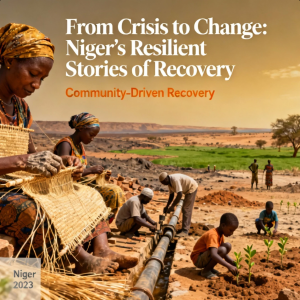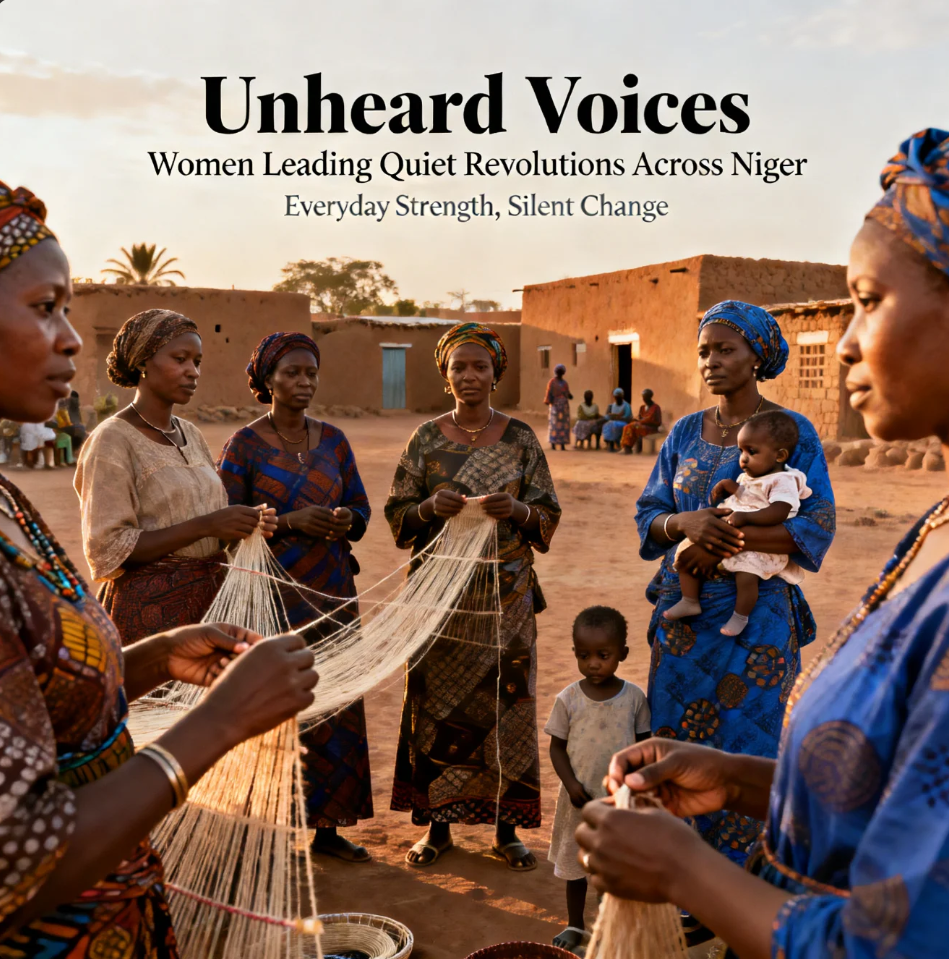
In Niger, change rarely arrives with loud protests or sweeping headlines. Instead, it moves quietly—through classrooms, marketplaces, health clinics, and village councils. At the heart of this transformation are women whose leadership often goes unseen but whose impact is profound.
Across Niger, women are driving social progress through resilience, innovation, and collective action, reshaping their communities in ways that challenge long-standing norms.
The Context: Tradition, Resilience, and Change
Niger faces deep-rooted challenges, including poverty, limited access to education, and gender inequality. Yet within these constraints, women have found ways to lead—not by confrontation, but through persistence and community trust.
These quiet revolutions are built on:
- Incremental social change
- Grassroots leadership
- Cultural negotiation rather than rejection
Progress happens not by dismantling tradition, but by expanding it.
Education as a Tool of Transformation
Women educators in Niger are redefining the future one classroom at a time. By advocating for girls’ education and literacy, they:
- Reduce early marriage rates
- Improve family health outcomes
- Create new economic opportunities
Education becomes both resistance and empowerment—subtle, but enduring.
Economic Leadership at the Local Level
From agriculture to small-scale trade, women entrepreneurs play a vital role in Niger’s informal economy.
Through cooperatives and micro-enterprises, women are:
- Supporting household incomes
- Building financial independence
- Strengthening local markets
Economic participation gives women a voice—often their first—in community decision-making.
Health Advocates & Community Builders
Women are also leading in healthcare awareness, particularly in:
- Maternal and child health
- Nutrition education
- Reproductive health outreach
Trusted within their communities, female health advocates bridge the gap between modern healthcare and traditional practices, saving lives through dialogue rather than disruption.
Civic Engagement Without the Spotlight
Quiet leadership often avoids formal titles. Women influence village councils, mediate disputes, and organize collective action behind the scenes.
Their leadership style emphasizes:
- Consensus over conflict
- Continuity over disruption
- Community well-being over personal recognition
This approach ensures change lasts beyond individual leaders.
Youth Mentorship & the Next Generation
Older women mentor younger girls, passing on skills, confidence, and ambition. These intergenerational networks sustain momentum, ensuring that progress is not isolated—but inherited.
The revolution continues not through slogans, but through example.
Why These Quiet Revolutions Matter
While large-scale policy changes are essential, sustainable transformation often begins locally. The work of women in Niger proves that:
- Influence does not require visibility
- Leadership does not require permission
- Change does not always announce itself
Quiet revolutions reshape societies from the inside out.
Final Thoughts
The women leading Niger’s quiet revolutions may not dominate headlines, but they are redefining leadership itself. Through education, economic resilience, healthcare advocacy, and mentorship, they are building a future rooted in dignity, inclusion, and strength.
Their voices may be unheard—but their impact is undeniable.