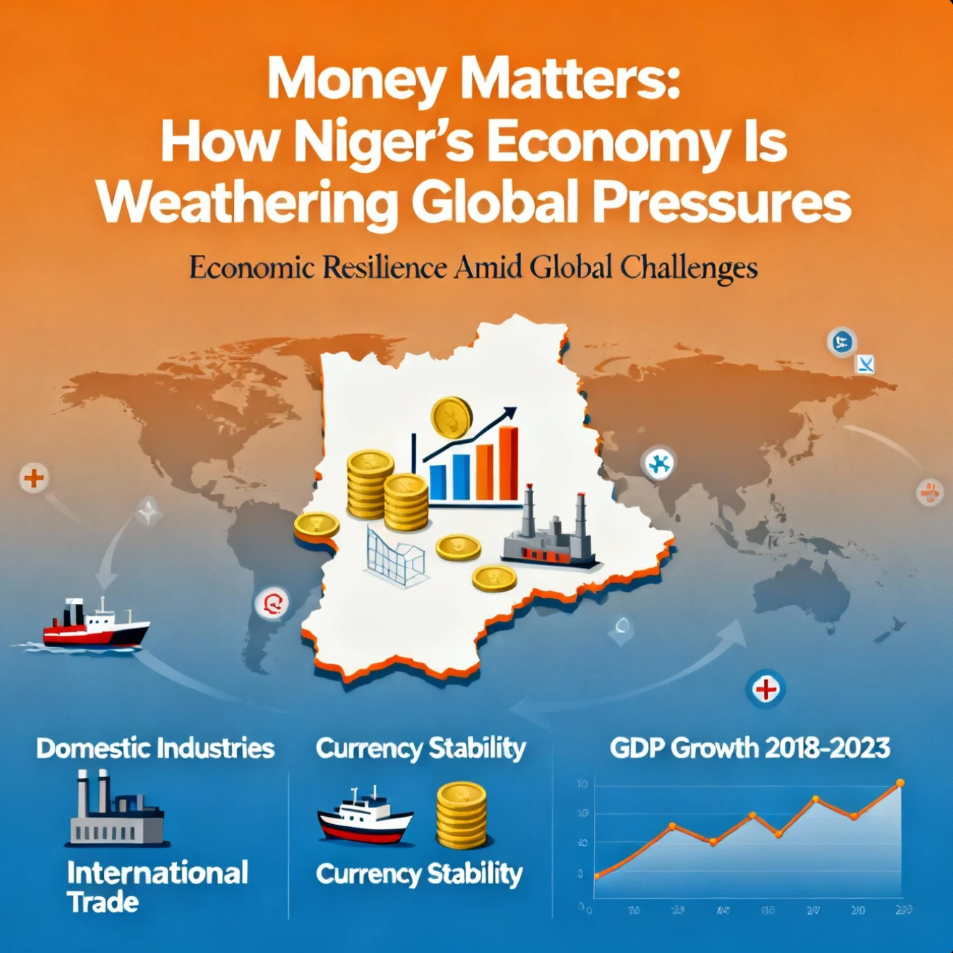
In an increasingly interconnected world, no economy is immune to global shocks. From inflation and supply chain disruptions to geopolitical instability, developing economies face unique challenges. Niger’s economy, shaped by regional realities and global market forces, offers a compelling case of resilience under pressure.
This article examines how Niger’s economy is weathering global pressures, highlighting the key forces at play and the strategies shaping its economic outlook.
Global Pressures Shaping Niger’s Economy
Inflation and Rising Costs
Like many countries, Niger has felt the impact of global inflation driven by:
- Higher energy and fuel prices
- Increased food import costs
- Currency pressures linked to global monetary tightening
These factors affect household purchasing power while placing strain on public finances and subsidies.
🔗 Outbound link: World Bank – Global Economic Prospects
https://www.worldbank.org
Energy, Commodities, and Resource Dependence
Balancing Opportunity and Risk
Niger’s economy relies significantly on natural resources and primary sectors. Global fluctuations in commodity prices directly influence:
- Export revenues
- Government income
- Investment confidence
While rising commodity demand can boost earnings, price volatility also exposes the economy to external shocks beyond domestic control.
Agriculture and Food Security
A Critical Economic Pillar
Agriculture remains central to Niger’s economy and employment. However, it faces compounding pressures from:
- Climate variability
- Rising input costs
- Global food market instability
Efforts to improve agricultural resilience and local food production are essential to buffering the economy against global disruptions.
🔗 Outbound link: FAO – Food Security and Climate
https://www.fao.org
Regional Trade and Economic Integration
Navigating Cross-Border Dynamics
Niger’s landlocked position makes regional trade vital. Global pressures have highlighted the importance of:
- Strengthening regional supply chains
- Improving transport and logistics infrastructure
- Deepening economic cooperation within West Africa
Regional integration helps mitigate external shocks by reducing reliance on distant global markets.
Fiscal Management and Public Spending
Adapting to Financial Constraints
Global economic uncertainty has increased borrowing costs and limited fiscal flexibility. In response, economic management in Niger focuses on:
- Prioritizing essential public spending
- Managing debt sustainably
- Seeking development partnerships and multilateral support
Prudent fiscal policy is key to maintaining stability during prolonged global uncertainty.
🔗 Outbound link: IMF – Fiscal Policy and Developing Economies
https://www.imf.org
Demographics and Long-Term Economic Potential
A Young Population, A Strategic Asset
Despite short-term pressures, Niger’s youthful population presents long-term opportunity. Investments in:
- Education and skills development
- Digital infrastructure
- Small business and entrepreneurship
can help transform demographic growth into economic resilience and innovation.
Challenges Ahead
While Niger’s economy has shown adaptability, challenges remain:
- Exposure to global price volatility
- Climate-related risks
- Infrastructure and development gaps
Addressing these issues requires coordinated domestic policy and sustained international cooperation.
Conclusion
Money matters—and in Niger, economic resilience matters even more. As global pressures reshape financial systems worldwide, Niger’s economy continues to navigate inflation, commodity volatility, and regional dynamics with cautious adaptation.
Understanding how Niger’s economy is weathering global pressures reveals both vulnerability and strength. With strategic investment, sound policy, and regional cooperation, Niger can continue building resilience in an uncertain global economic landscape.