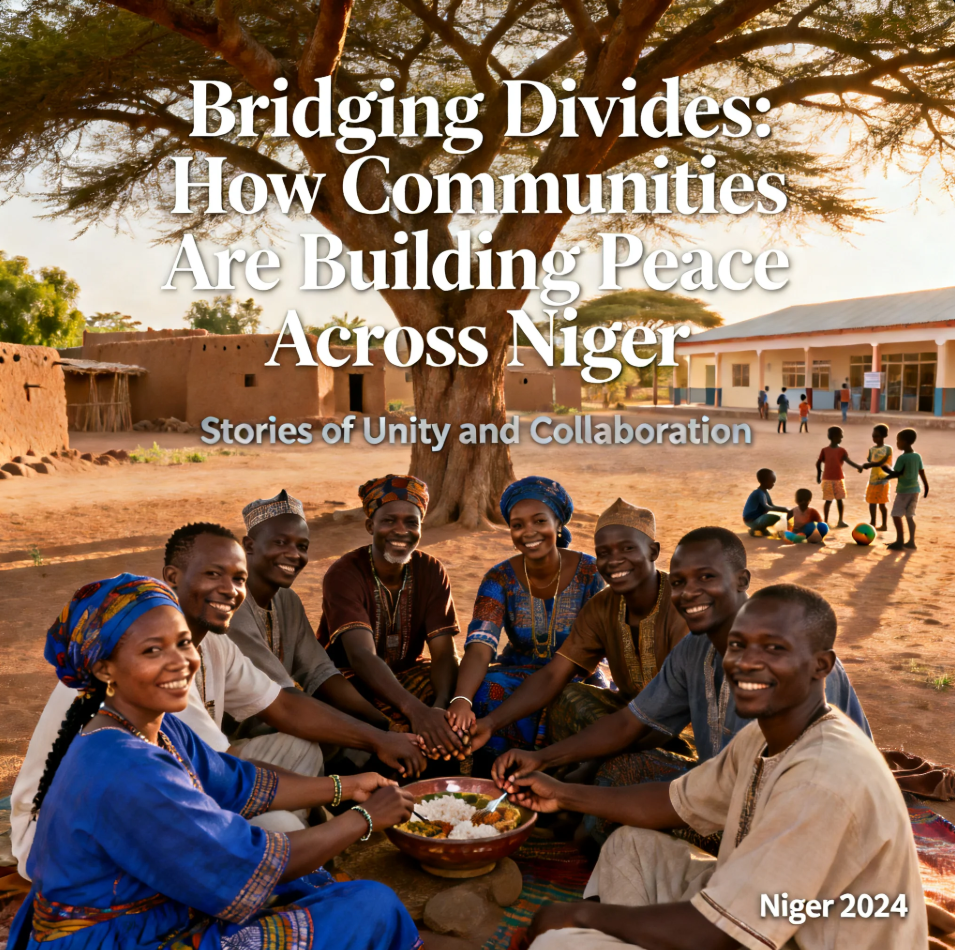
Niger has faced significant social, economic, and security challenges in recent years. Yet amid these pressures, local communities are playing a powerful role in building peace from the ground up. Rather than waiting for top-down solutions, citizens across Niger are finding ways to bridge divides, rebuild trust, and strengthen social cohesion.
These grassroots efforts show how peace can take root even in the most complex environments.
The Power of Local Dialogue
One of the most effective tools in community peacebuilding in Niger is dialogue.
- Village elders facilitate conversations between conflicting groups
- Youth leaders organize forums to discuss grievances peacefully
- Women’s groups create safe spaces for reconciliation
By encouraging open communication, communities reduce misunderstandings and prevent small tensions from escalating into violence.
Traditional Leadership and Cultural Mediation
Niger’s traditional structures play a vital role in conflict resolution.
- Chiefs and religious leaders mediate disputes using respected customs
- Cultural values emphasize coexistence, hospitality, and mutual respect
- Long-standing traditions provide legitimacy to peace agreements
These culturally rooted approaches often succeed where external interventions struggle.
Youth-Led Initiatives for Peace
Young people are central to Niger’s peacebuilding future.
- Youth associations promote unity through sports, arts, and education
- Peer-to-peer programs counter radicalization and misinformation
- Community projects offer alternatives to conflict-driven paths
By empowering youth, communities invest in long-term stability and shared purpose.
Women as Anchors of Community Stability
Women are often at the heart of reconciliation efforts.
- Mothers and women leaders encourage nonviolent solutions
- Women-led cooperatives rebuild trust through economic collaboration
- Grassroots advocacy amplifies voices often excluded from formal processes
Their involvement strengthens peace initiatives by addressing both emotional and practical community needs.
Shared Livelihoods as a Bridge Between Groups
Economic cooperation is another key peacebuilding strategy.
- Farmers and herders negotiate shared land and water access
- Community markets bring diverse groups together
- Joint projects reduce competition-driven conflict
When livelihoods depend on cooperation, peace becomes a shared interest.
Building Trust Through Local Solutions
Community-driven peace efforts work because they are:
- Locally owned and culturally relevant
- Flexible and responsive to real needs
- Built on relationships rather than authority
This trust allows communities to resolve conflicts early and sustainably.
Challenges and Ongoing Efforts
While progress is real, challenges remain:
- Resource scarcity
- Security threats
- Climate-related pressures
Despite these obstacles, communities across Niger continue to adapt, innovate, and collaborate—proving that peace is not passive, but actively built.
Conclusion
Community peacebuilding in Niger shows that lasting peace begins at the local level. Through dialogue, cultural leadership, youth engagement, women’s participation, and shared livelihoods, communities are bridging divides and shaping a more resilient future. These efforts remind us that even in fragile contexts, unity and cooperation remain powerful forces for change.