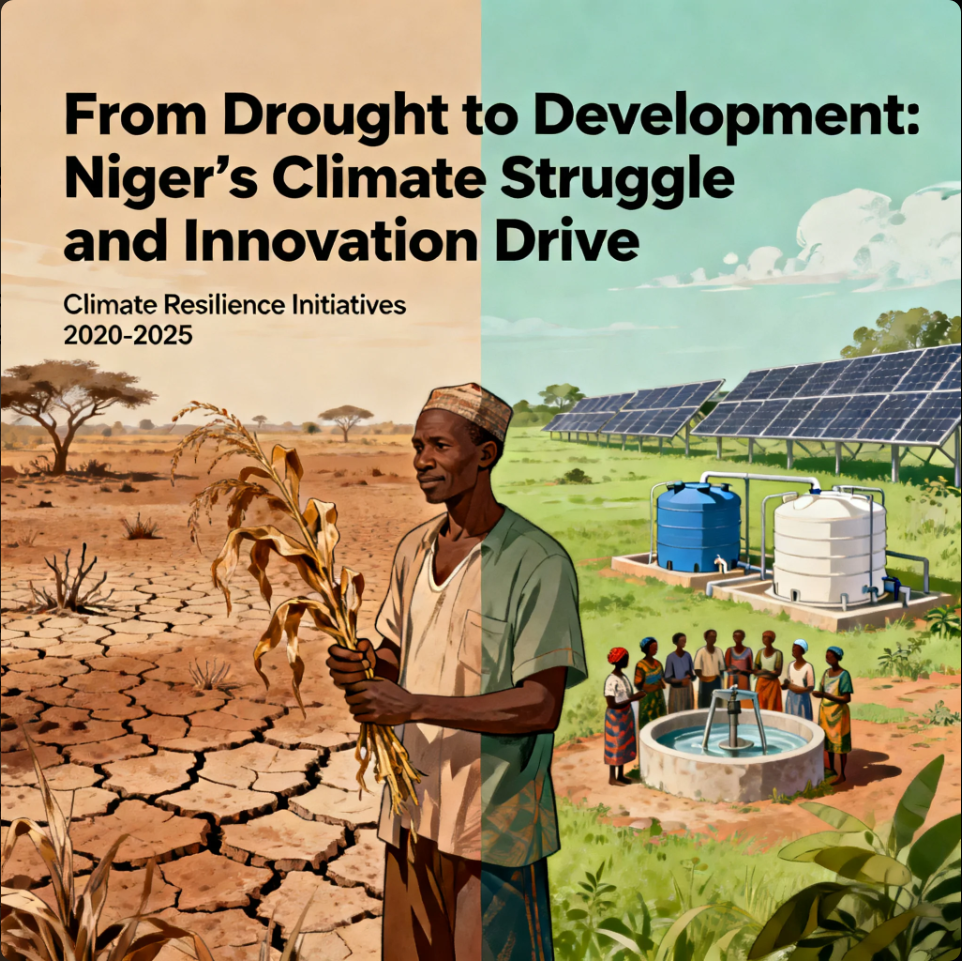
Niger sits on the front lines of climate change. With rising temperatures, frequent droughts, and fragile ecosystems, Niger’s climate struggle has long challenged food security, livelihoods, and economic growth. Yet amid these pressures, the country is also becoming a powerful example of resilience and innovation.
From climate-smart agriculture to renewable energy initiatives, Niger is transforming adversity into opportunity.
The Reality of Climate Pressure in Niger
Much of Niger lies within the Sahel, a region highly vulnerable to climate variability. Rainfall patterns have become increasingly unpredictable, while prolonged dry seasons strain water resources and agricultural output.
For communities dependent on farming and livestock, these changes directly affect income, nutrition, and stability. Climate stress is not an abstract concept—it is part of daily life.
Agriculture at the Center of the Challenge
Agriculture employs a large portion of Niger’s population, making it especially sensitive to climate disruption. Poor soil quality, desertification, and water scarcity compound the effects of drought.
However, these challenges have also sparked innovation. Farmers, supported by local organizations and development partners, are adopting practices designed to restore land and improve resilience.
Innovation Driving Climate Resilience
Across Niger, practical solutions are gaining momentum:
- Climate-smart farming, including drought-resistant crops and soil regeneration techniques
- Water management innovations, such as small-scale irrigation and rainwater harvesting
- Farmer-led land restoration, revitalizing degraded land through sustainable methods
- Renewable energy projects, expanding access to solar power in rural areas
These approaches blend traditional knowledge with modern science, creating solutions tailored to local conditions.
Community-Led Solutions and Local Knowledge
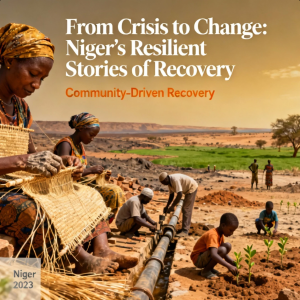
One of Niger’s greatest strengths lies in its communities. Local farmers and innovators are not passive recipients of aid—they are active problem-solvers.
By combining ancestral land-management practices with new technologies, communities are improving yields, protecting ecosystems, and building long-term resilience.
Climate Action as a Path to Development
Addressing climate challenges in Niger is not just about survival; it is about development. Sustainable practices help stabilize food supplies, reduce poverty, and create economic opportunities.
As resilience grows, so does the potential for education, entrepreneurship, and regional growth. Climate adaptation becomes a foundation for broader progress.
The Role of Innovation in Shaping the Future
Innovation in Niger is often simple, affordable, and scalable—qualities essential for long-term success. Whether through mobile-based weather information, solar-powered water pumps, or cooperative farming models, small changes are delivering meaningful impact.
These innovations show that development does not always require complex systems—only smart, locally grounded solutions.
From Struggle to Strength
Niger’s climate struggle remains real, but so does its determination. By investing in innovation, sustainability, and community leadership, the country is rewriting its climate story.
From drought to development, Niger’s journey demonstrates how resilience can drive hope, progress, and lasting change.
Trusted Outbound Resources
- United Nations Development Programme – Climate Adaptation in the Sahel
- World Bank – Climate-Smart Agriculture in Africa
- Food and Agriculture Organization – Resilience Building in Niger