As a landlocked nation at the heart of West Africa, Niger’s economic future depends heavily on regional cooperation. Through strategic partnerships focused on trade, transport, and infrastructure, the country is working to overcome geographic challenges and unlock new development opportunities.
Understanding Niger’s regional partnerships reveals how collaboration is shaping a more connected and resilient economy.
🌍 1. Why Regional Partnerships Matter for Niger
Without direct access to the sea, Niger relies on neighboring countries for:
- Trade corridors and port access
- Cross-border transport infrastructure
- Energy, goods, and supply chains
Regional partnerships reduce costs, improve logistics, and strengthen Niger’s integration into West African and continental markets.
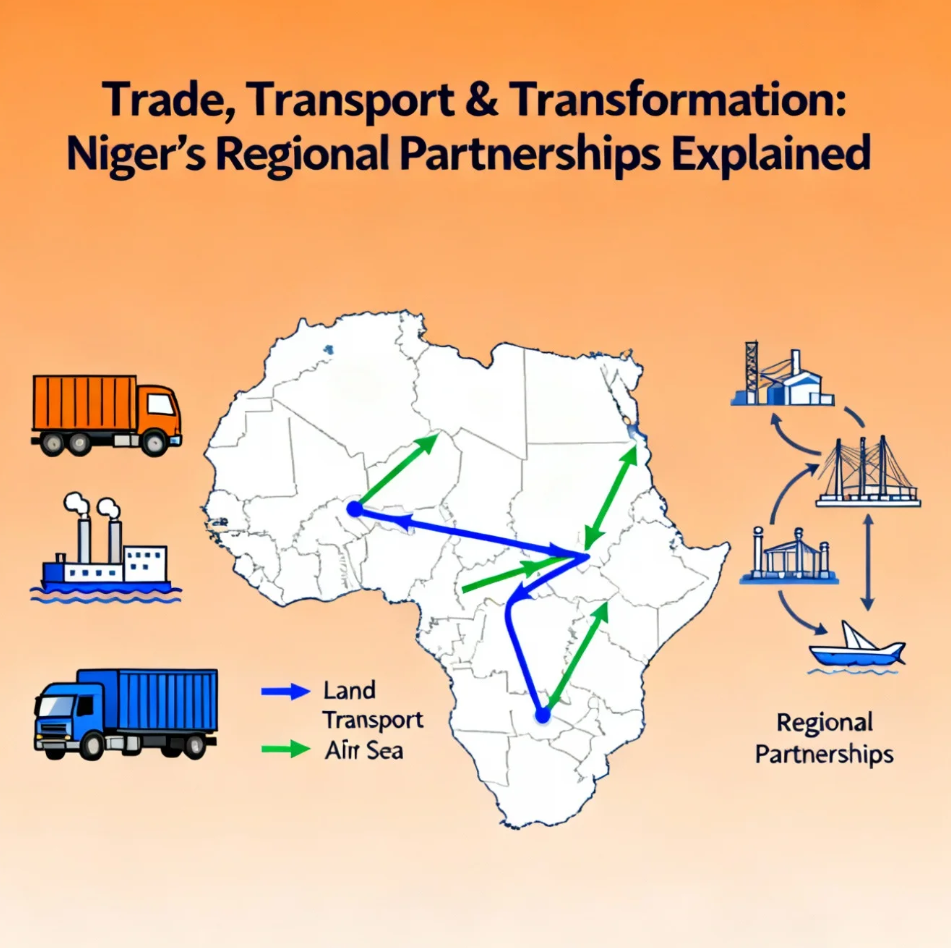
🚚 2. Trade Corridors Powering Economic Activity
Transport corridors are the backbone of Niger’s trade strategy. Key partnerships focus on:
- Road and rail links to ports in Benin, Togo, and Nigeria
- Harmonized customs procedures to reduce delays
- Safer, more efficient transit routes for exports and imports
These corridors enable Nigerien products—such as agricultural goods, livestock, and minerals—to reach broader markets.
🔗 Outbound link: https://www.ecowas.int/
🚧 3. Infrastructure as a Tool for Transformation
Regional cooperation goes beyond trade—it fuels transformation through infrastructure development:
- Joint road and bridge projects
- Cross-border energy and power initiatives
- Digital connectivity and telecommunications expansion
Such projects improve mobility, attract investment, and support long-term economic resilience.
📦 4. Continental Integration and AfCFTA
Niger’s participation in the African Continental Free Trade Area (AfCFTA) strengthens its regional strategy:
- Reduced tariffs across African markets
- Easier movement of goods and services
- Greater opportunities for small and medium enterprises
Regional partnerships help Niger align local industries with continental trade standards.
🔗 Outbound link: https://afcfta.au.int/
🤝 5. Shared Growth Through Cooperation
Successful partnerships are built on mutual benefit:
- Neighboring states gain stable trade routes
- Niger improves market access and logistics
- The region benefits from economic stability and cooperation
This shared-growth model positions Niger as a key transit and trade hub rather than a peripheral economy.
🔮 Final Thoughts: Connectivity Drives the Future
Trade, transport, and transformation are deeply interconnected in Niger’s development journey. By strengthening regional partnerships, Niger is turning geographic challenges into strategic advantages—building pathways to growth, resilience, and regional integration.
As infrastructure improves and cooperation deepens, Niger’s role in West Africa’s economic landscape will continue to expand.